Louisiana May Label Sweepstakes Casinos as Racketeering
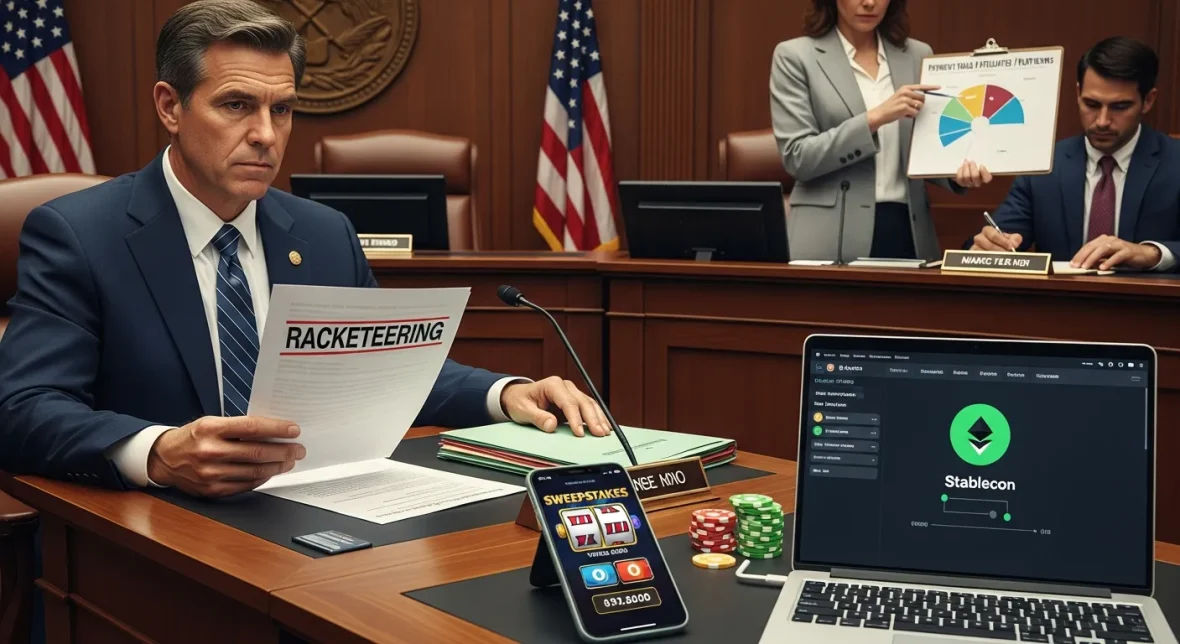
If you invest anywhere near online gaming, payments, or crypto infrastructure, Louisiana’s latest move should get your attention. The state is considering whether certain online sweepstakes casinos should be treated not just as “maybe-illegal,” but as racketeering. That’s a very different kind of signal.
In practical terms, it’s the difference between a regulator asking a business to change its terms and a state building cases that can reach operators, affiliates, payment partners, and sometimes even the tech stack that keeps the whole thing running. If you’re watching market narratives around Web3 gaming, stablecoin payments, or “casino-adjacent” tokens, this is one of those policy stories that can shift sentiment fast, sometimes before anyone’s really read the bill.
Here’s what Louisiana is proposing, why it’s happening now, and what you should be watching if you care about business risk, enforcement risk, and the downstream crypto angle.
Key Takeaways
- Louisiana could classify online sweepstakes casinos as racketeering, signaling a much tougher enforcement posture than a typical licensing or consumer-protection dispute.
- A racketeering framework can expand liability beyond operators to affiliates, marketing networks, game vendors, payment processors, and other infrastructure providers connected to sweepstakes casinos.
- The core legal gray area isn’t the “free entry” language on paper, but whether the product functions like real-money gambling with easy deposits and cash-like redemptions.
- Louisiana’s push is driven by consumer complaints, problem-gambling concerns, and pressure from licensed gaming operators seeking tax and regulatory parity.
- Payment rails are likely to feel the impact first, as banks, card/ACH providers, and crypto off-ramps may tighten underwriting, raise reserves, or exit sweepstakes casino flows entirely.
- Crypto exposure (stablecoins, wallet-based access, and on-chain deposits) can heighten compliance scrutiny, making strong AML/KYC, transaction monitoring, and partner behavior key signals to watch.
What Louisiana Is Proposing And Why It Matters
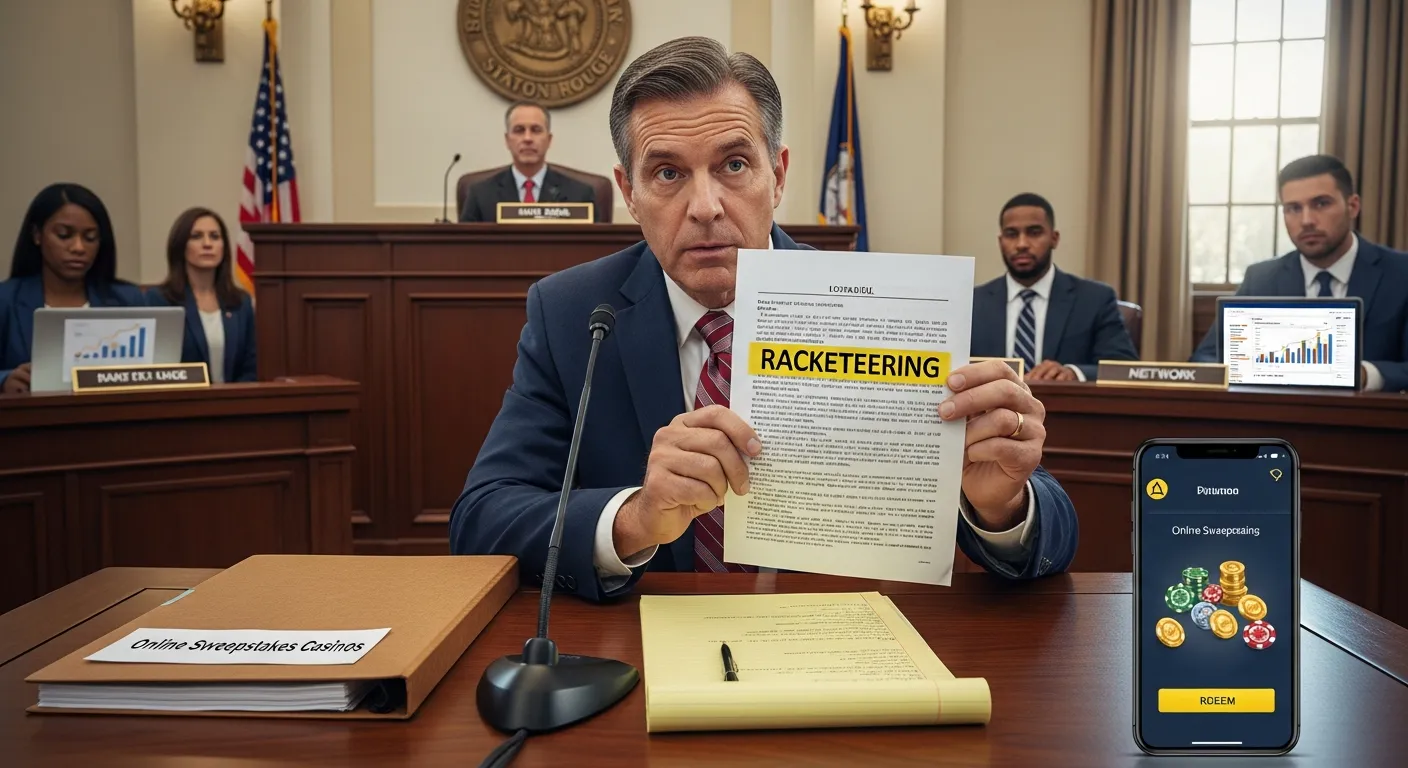
Louisiana lawmakers are signaling a tougher stance on online sweepstakes casinos by floating language that could treat certain models as a form of racketeering activity. That’s not a casual word choice. Racketeering frameworks tend to widen the lens: instead of focusing only on the end operator, they can pull in the network of people and businesses that allegedly helped the conduct happen.
If you’re an investor, the “why it matters” isn’t just whether a specific site is legal in a specific state. It’s that racketeering theories can increase penalties, expand who can be targeted, and raise the cost of doing business, especially for companies that rely on distribution partners, payment rails, and advertising.
How Sweepstakes Casinos Work (And Where The Legal Gray Area Lives)
Most sweepstakes casinos borrow a structure that’s been used in marketing for decades: “no purchase necessary” sweepstakes. The pitch, usually, goes like this: you can get entries (or a virtual currency) for free through a mail-in request or daily login, but you can also buy a separate virtual currency package that happens to come with “bonus” entries. The operator then argues the paid part isn’t technically gambling because the sweepstakes entries can be obtained without buying.
In my experience watching gaming enforcement, this gray area isn’t about whether free entry exists on paper. It’s about how the product behaves in real life. If the path that actually gets used by most customers looks, feels, and functions like paying for casino play, and if players can redeem winnings for cash or cash-like value, states start treating the “sweepstakes wrapper” as a legal fig leaf.
Louisiana isn’t the only state to question this, but what’s notable is the willingness to escalate the framing.
What “Racketeering” Classification Could Cover In Practice
When lawmakers and prosecutors use racketeering language, they’re often looking at patterns of activity, not a one-off violation. That can matter because it may let the state argue that a whole business model is built around repeated unlawful conduct.
In practice, if a sweepstakes casino is classified under a racketeering-style theory, you can see risk spread outward. Marketing partners who drive traffic, vendors who supply game content, payment processors that move funds, and even service providers that help with customer onboarding can find themselves dragged into investigations or forced to answer hard questions.
You also get a chilling effect: even before a court decides anything, counterparties often back away because the reputational and legal costs aren’t worth it.
Why Louisiana Is Targeting Online Sweepstakes Casinos Now
The timing isn’t random. States tend to act when three things line up: consumer complaints hit a level they can’t ignore, licensed industries demand “same rules for everyone,” and enforcement agencies decide the status quo is creating too many loopholes.
Louisiana checks those boxes. It has established gaming interests, a public policy focus on problem gambling, and growing awareness that online “not-quite-gambling” products can scale quickly without the controls brick-and-mortar operators must follow.
Consumer Protection And Problem Gambling Concerns
If you strip away the legal labels, the consumer protection argument is pretty straightforward: products that mimic casino gambling can drive the same behaviors, whether or not they call themselves gambling.
I’ve found that regulators care less about clever phrasing and more about friction, or the lack of it. If a user can deposit in seconds, chase losses all night, and cash out value the next day, the risk profile looks like gambling. Add in heavy promotional tactics and the always-on nature of mobile access, and you can see why lawmakers start asking whether safeguards are strong enough.
Consumer protection concerns also show up in smaller, practical ways: disputed payouts, unclear redemption rules, confusing dual-currency systems, and inconsistent customer support. Those may sound like business issues, but they often become the political fuel for enforcement.
Tax, Enforcement, And Regulatory Parity With Licensed Gaming
Licensed gaming operators pay taxes, licensing fees, and compliance costs. They also live with audits, reporting requirements, and strict controls around advertising and age gating. When sweepstakes casinos compete for the same entertainment dollars without those burdens, licensed operators tend to push back, and they usually have influence.
From the state’s point of view, parity arguments are persuasive. If two products look similar to consumers, the state starts asking why one is contributing tax revenue and funding responsible gaming programs while the other isn’t.
Enforcement is the other piece. If existing laws weren’t written with today’s online models in mind, states either try to stretch old definitions or pass new language that gives agencies clearer tools. Racketeering-style language, if it moves forward, is the “bigger hammer” approach.
What Could Change For Operators, Platforms, And Payment Rails
If Louisiana goes down this road, operators won’t be the only ones rewriting their risk memos. The most immediate changes often happen in the plumbing of the business: payment processing, marketing distribution, and platform policies.
And here’s the part investors sometimes miss: even a single state action can trigger broader platform decisions. Payments and advertising companies generally don’t like state-by-state firefights. They prefer clear, low-risk categories.
Potential Criminal And Civil Exposure For Businesses And Affiliates
If the state frames certain sweepstakes casino activity as racketeering, you could see exposure broaden in two ways: who can be accused, and what claims can be brought.
Operators obviously sit at the center. But affiliates and marketing partners are worth watching. If your business model relies on paid traffic, influencer deals, SEO, or lead-gen funnels, your legal team is going to care about whether “promotion” or “aiding” becomes part of the theory.
Civil exposure matters too. Tougher classifications can encourage private lawsuits, especially if consumers claim deceptive marketing or unfair business practices. Even when companies win, litigation costs can be brutal, and that affects valuations.
Payment Processing, Banking Access, And Off-Ramps Under Pressure
Payments are where policy stories turn into real-world business interruptions. If processors decide a category is high-risk, you can see higher fees, more reserves, sudden account closures, or outright denials.
This pressure can land on traditional rails first, card networks, ACH providers, sponsor banks, but it doesn’t stop there. Off-ramps that connect crypto to fiat and fiat to crypto are sensitive to perceived gambling exposure. If compliance teams think a flow looks like gambling proceeds, they may require enhanced checks or refuse the business.
Even if you’re not operating in Louisiana, you should watch whether major processors treat this as a signal for tighter underwriting nationwide. That’s often how these stories spread: not through court wins, but through risk departments changing policy.
Crypto’s Role In Sweepstakes Gaming And The Compliance Ripple Effects
Crypto shows up in sweepstakes gaming because it solves a few business problems at once: it can move value quickly, it can reach users who prefer not to use cards, and it can route around some friction that comes with traditional banking.
But that same convenience is exactly why regulators and compliance teams watch it closely. When a state starts using words like racketeering, anything that looks like “helping the funds move” becomes a focal point.
Stablecoins, On-Chain Deposits, And Wallet-Based Access
Stablecoins are the obvious tool here. They’re fast, widely available, and easy to account for compared with volatile assets. Some platforms also like on-chain deposits because they reduce chargeback risk and make cross-border flows simpler.
If you’re evaluating projects in this area, pay attention to whether a platform encourages wallet-based access as the primary path, or whether it keeps crypto as an optional method behind stronger checks. In my experience, “optional and controlled” reads very differently to regulators than “default and frictionless.”
Wallet-based access also creates a branding issue. A sweepstakes casino that leans heavily into crypto can end up being described, fairly or not, as trying to dodge traditional oversight. That perception alone can raise enforcement attention.
AML/KYC, Chain Analytics, And Transaction Monitoring Expectations
Once enforcement pressure rises, the compliance bar usually rises with it. That means stronger KYC, clearer source-of-funds questions, better sanctions screening, and more serious transaction monitoring.
On-chain activity isn’t invisible, and chain analytics tools have matured a lot in the last few years. If a platform is taking stablecoin deposits, you should assume counterparties will ask whether it screens addresses, flags mixing services, and monitors for suspicious patterns.
If you follow crypto markets through a research hub like Cryptsy, this is the kind of cross-sector issue worth tracking alongside price charts. Regulatory risk often hits narratives first, then liquidity, partnerships, and banking access.
How This Could Affect Crypto Investors And Token Narratives
Even if you don’t touch gaming stocks or gaming tokens directly, enforcement actions can ripple into the crypto themes investors like to trade: payments, identity, compliance tooling, and Web3 entertainment.
The key is to separate “short-term headline risk” from “structural demand.” Sometimes a crackdown kills a business model. Other times, it simply pushes the market toward licensed operators and better compliance, meaning the winners change, not the whole category.
Market Sentiment For Gaming-Adjacent Tokens And Infrastructure Projects
When mainstream headlines connect crypto and gambling, sentiment can swing fast. You may see investors dump anything that feels adjacent: casino tokens, reward tokens, and even unrelated infrastructure projects if the market is jumpy.
But there’s a second-order effect that can cut the other way. If payment compliance becomes a bigger requirement, infrastructure projects that support monitoring, identity, and risk scoring can see renewed interest. I’m not saying every “compliance coin” wins, markets are rarely that neat, but the narrative shift is real.
What I’d watch is partner behavior. If exchanges, wallets, or payment providers start announcing restrictions on gambling-related flows, tokens tied to those ecosystems can feel the impact even if the token itself has nothing to do with Louisiana.
Regulatory Spillover Risk For Web3 Gaming And Prediction Markets
Sweepstakes casinos aren’t the same as Web3 games, and they aren’t the same as prediction markets. But regulators sometimes group things by how they function for consumers, not by how builders describe them.
If Louisiana (or other states) normalizes tougher language, you could see spillover questions like: Does this token-based game resemble wagering? Does this “play-to-earn” loop look like a financial incentive tied to chance? Does this prediction market have the right licenses, and if not, who’s providing liquidity and how?
If you’re investing in Web3 gaming, it’s worth stress-testing the story you’re buying. Ask yourself: if a skeptical regulator reads the product description, do they see “game,” or do they see “bet”?
What To Watch Next: Legislative Timeline, Enforcement Signals, And Legal Challenges
This kind of proposal can move in a few directions: it can stall, it can pass with narrowed language, or it can pass and then get tested through enforcement and court challenges. If you want to stay ahead of the market reaction, you’ll watch the process like you’d watch earnings season, small signals matter.
Key Milestones In Committee, Floor Votes, And Rulemaking
Committee hearings are where you learn what’s really in play. That’s where industry groups show up, amendments get floated, and lawmakers reveal whether they’re trying to ban a model outright or just force it into a licensing framework.
Floor votes matter, but so does what happens after. If agencies are directed to write rules or issue guidance, the wording can shape the real impact. I’ve seen bills that looked mild until rulemaking made compliance expensive, and I’ve seen “tough” bills that ended up narrow in practice because agencies focused on the worst actors.
Indicators From Regulators, State Attorneys, And Platform Policy Changes
Enforcement signals can show up before formal action. Watch for public statements from state attorneys general, gaming regulators, or consumer protection offices. Also watch for quieter signals: platforms updating terms, payment providers changing acceptable-use policies, or major affiliates pausing campaigns.
If you see multiple companies making the same “voluntary” change at the same time, that’s usually not a coincidence. It’s often a response to behind-the-scenes outreach or a shared reading of risk.
As an investor, your edge is paying attention when the story is still confined to policy pages, not when it’s already priced into everyone’s models.
Conclusion
If Louisiana moves to classify online sweepstakes casinos as racketeering, it’s a statement about enforcement posture more than a technical debate about sweepstakes rules. And that posture can reach further than you might expect, into marketing networks, payment rails, and crypto on-ramps and off-ramps.
Your practical takeaway is simple: treat this as a risk-mapping event. If you’re invested in gaming-adjacent tokens, payment infrastructure, Web3 entertainment, or compliance tooling, watch the legislative language, watch what major processors do, and watch whether platforms start quietly tightening policies.
Markets don’t wait for perfect clarity. They move on signals. Louisiana is sending one.
Frequently Asked Questions (FAQs)
What does it mean that Louisiana could classify online sweepstakes casinos as racketeering?
If Louisiana classifies certain online sweepstakes casinos as racketeering, it signals a tougher enforcement posture. Racketeering theories can treat the activity as a repeated pattern, not a one-off issue, potentially increasing penalties and widening investigations beyond the operator to partners who helped the model function.
How do online sweepstakes casinos work, and why are they in a legal gray area?
Sweepstakes casinos typically offer “no purchase necessary” entry (mail-in or daily login), while also selling virtual currency bundles that include “bonus” entries. The gray area isn’t just whether free entry exists, but whether the real user experience functions like paid casino play with cash-out or cash-like redemption.
Who could be affected if Louisiana treats online sweepstakes casinos as racketeering activity?
A racketeering-style approach can expand risk to an ecosystem: affiliates driving traffic, influencers, ad networks, game-content vendors, payment processors, onboarding/KYC providers, and other service partners. Even before court outcomes, counterparties may exit due to reputational risk, higher compliance costs, or fear of being pulled into investigations.
Why is Louisiana targeting online sweepstakes casinos now?
States often move when consumer complaints rise, licensed gaming pushes for “same rules,” and regulators see loopholes scaling quickly. Louisiana has established gaming interests, a policy focus on problem gambling, and growing concern that casino-like mobile products can expand without the controls licensed operators must follow.
How could Louisiana’s sweepstakes casino crackdown impact payment processing and crypto off-ramps?
Payment risk departments may react faster than courts. Processors could raise fees, require larger reserves, restrict accounts, or deny service. That pressure can extend to crypto on-ramps/off-ramps if flows resemble gambling proceeds, leading to enhanced due diligence, stricter monitoring, or refusals—sometimes nationwide, not just in Louisiana.
Are sweepstakes casinos legal in Louisiana, and how can players tell if a site is compliant?
Legality can be unsettled and may change with new bills, enforcement actions, or court tests. Players should look for clear “no purchase necessary” instructions, transparent redemption rules, strong age/location checks, and reputable payment methods. For certainty, consult Louisiana gaming regulator updates or a qualified attorney.