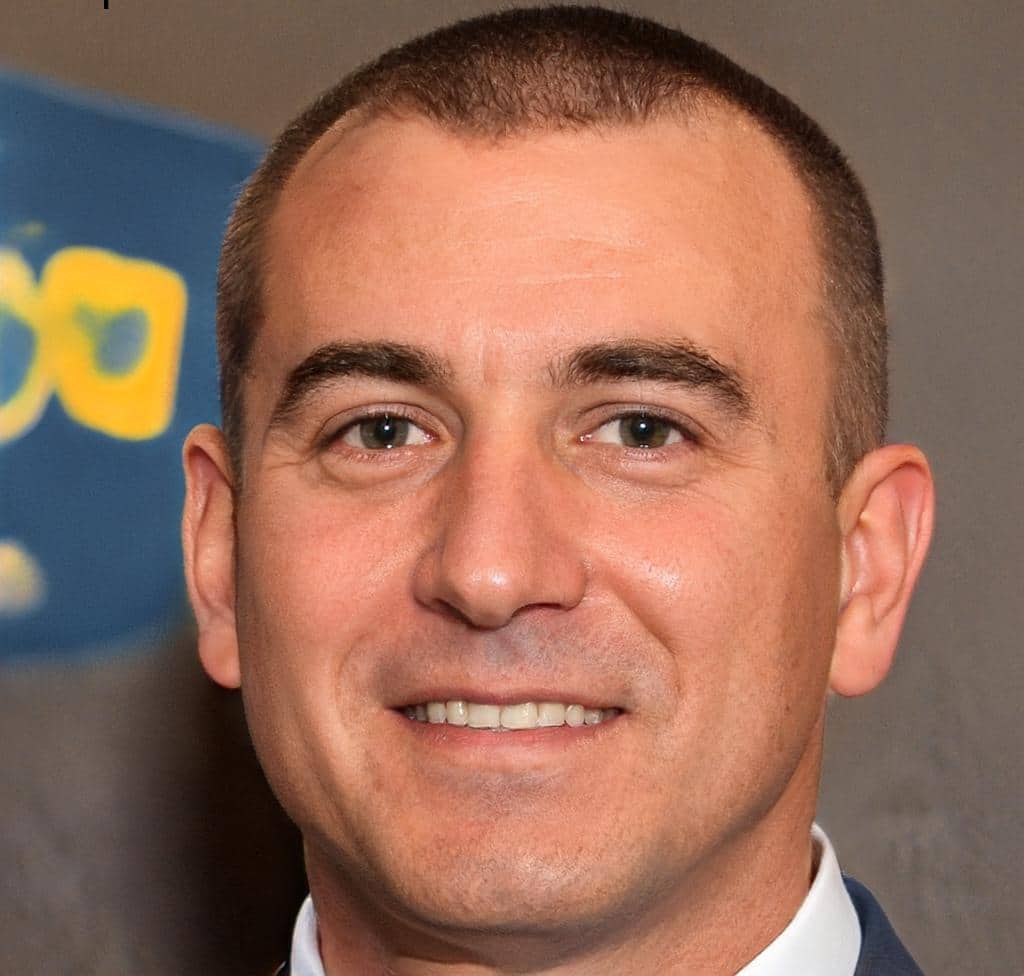
Zeljko Ranogajec Texas Lottery Syndicate: The $85M Takeover

Professional gambler Zeljko Ranogajec has publicly admitted to financing a syndicate that spent $25.8 million buying 25.8 million Lotto Texas tickets in April 2023, securing a $95 million jackpot and an estimated $20 million net profit. The operation exploited licensed lottery terminals and third-party courier services to print tickets at industrial scale. Texas regulators responded by banning courier services outright, and former Texas Lottery CEO Gary Grief now faces a class-action lawsuit over his alleged role in enabling the scheme.
How a Syndicate Bought 25.8 Million Tickets and Won $95 Million
The Mechanics of the April 2023 Lotto Texas Operation
The April 2023 Lotto Texas drawing had a jackpot sitting at $95 million, a figure large enough to make bulk ticket purchasing mathematically attractive. Ranogajec’s syndicate calculated that buying every statistically significant combination, at $1 per ticket, could guarantee a positive return once the lump-sum payout exceeded the total outlay. The group spent exactly $25.8 million printing 25.8 million tickets through licensed lottery terminals, covering a dominant share of the possible number combinations.[1]
The lump-sum payout came to $57.8 million before taxes. After subtracting the $25.8 million ticket cost and accounting for federal and state tax obligations, the syndicate walked away with an estimated $20 million in profit. The operation was not a lucky win. It was a calculated bulk-purchase arbitrage play. Courier services, which allow customers to buy official lottery tickets remotely through a licensed intermediary, provided the logistical infrastructure that made printing at this volume possible.[2]
Courier platforms essentially act as agents: a customer places an order online, the courier purchases a physical ticket at a licensed terminal, and the ticket is held on the customer’s behalf. Ranogajec’s team used this system not for convenience but for scale, running ticket orders through terminals across Texas to reach the 25.8 million figure before the draw closed.
Why the Math Worked This Time
Lotto Texas uses a 6-of-54 number format, producing 25,827,165 possible combinations, which is almost exactly the number of tickets the syndicate purchased.[1] At a $95 million jackpot and a $57.8 million lump sum, the gross return per dollar spent was approximately $2.24. That margin covered ticket costs and still left room for profit even after a roughly 37% combined federal and state tax burden.
This type of operation only works when the jackpot climbs high enough relative to the total number of combinations. Most Lotto Texas drawings never reach a threshold where bulk purchasing becomes profitable, which is why the syndicate waited for the jackpot to roll over repeatedly before acting. The April 2023 drawing represented a rare convergence of jackpot size and combination count that made the scheme viable.
Ranogajec’s Admission and the Legal Consequences for Texas Officials
Who Is Zeljko Ranogajec and Why His Admission Matters
Zeljko Ranogajec is an Australian professional gambler widely regarded as one of the most successful betting syndicate operators in the world. Known in gambling circles as “The Joker,” Ranogajec built his reputation through horse racing wagering in Australia before expanding into international lottery and sports betting markets. His admission to financing and coordinating the Texas ticket-printing operation is the first time he has publicly confirmed involvement in a specific lottery syndicate scheme of this scale.[2]
Ranogajec confirmed that his group used licensed terminals, meaning every ticket purchased was technically legal under the rules that existed at the time. The syndicate did not hack the lottery, forge tickets, or tamper with the draw. They identified a structural gap in Texas lottery regulations and exploited it within the letter, if not the spirit, of the law. That distinction matters enormously for how regulators and courts treat the case.
Former Texas Lottery CEO Gary Grief faces a class-action lawsuit filed by ordinary lottery players who allege that Grief conspired with courier services and the syndicate to facilitate the mass ticket printing. The lawsuit argues that allowing a single syndicate to purchase 25.8 million tickets effectively made the draw non-competitive for regular players, who had no practical ability to match that volume.[1]
The Texas Lottery Commission’s Regulatory Response
The Texas Lottery Commission moved quickly after the scheme became public, banning courier services that allow remote ticket purchases. The ban directly targets the logistical mechanism Ranogajec’s syndicate used: without couriers able to print tickets at scale through licensed terminals, replicating a 25.8 million-ticket operation becomes operationally impossible for any outside group.[2]
The courier ban affects legitimate users too. Platforms like Jackpot and Lottery.com had built businesses around letting Texans buy official state lottery tickets from their phones. Those services are now prohibited in Texas, a significant market loss for the courier industry. The Commission has not announced any plans to create a regulated bulk-purchase framework that would distinguish between individual convenience buyers and syndicate-scale operations.
Legal analysts watching the Grief lawsuit note that proving conspiracy requires demonstrating that officials knowingly facilitated the scheme rather than simply failing to anticipate it. That is a high bar, but the class-action filing signals that affected players intend to pursue accountability through civil courts regardless of whether criminal charges follow.
Lottery Syndicate Schemes: A Global History With Specific Numbers
| Year | Lottery / Country | Tickets Purchased | Jackpot | Outcome |
|---|---|---|---|---|
| 1992 | Virginia Lottery, USA | ~5 million | $27 million | Syndicate won; rules tightened |
| 1992 | Irish National Lottery | ~1.1 million | £1.7 million | Partial coverage; syndicate won |
| 2023 | Lotto Texas, USA | 25.8 million | $95 million | Syndicate won; couriers banned |
Bulk lottery syndicate operations are not new. In 1992, a group led by Stefan Mandel, a Romanian-Australian mathematician, purchased approximately 5 million tickets for the Virginia State Lottery, covering most of the 7.1 million possible combinations and winning a $27 million jackpot. Virginia subsequently changed its rules to prohibit bulk purchases. Mandel’s earlier 1992 Irish National Lottery attempt covered roughly 1.1 million of 1.947 million combinations but faced logistical problems that prevented full coverage.[1]
The 2023 Texas operation dwarfs all historical precedents in both ticket volume and jackpot size. Ranogajec’s syndicate purchased 25.8 million tickets, a figure that matches the total number of Lotto Texas combinations almost exactly. No previous syndicate operation has achieved near-complete combination coverage at this scale in a major American state lottery.
The global lottery market generated approximately $300 billion in ticket sales in 2022, according to industry estimates, making it one of the largest regulated gambling sectors worldwide. State lotteries in the United States alone accounted for over $100 billion in fiscal year 2022 sales. The concentration of that revenue makes lottery regulation a politically sensitive issue: states depend on lottery proceeds for education and infrastructure funding, which creates institutional pressure to maximize ticket sales rather than restrict them.[2]
That revenue dependency is precisely why regulators historically moved slowly to close bulk-purchase loopholes. Courier services generated significant ticket volume and commission revenue for state lotteries. Banning them costs the Texas Lottery Commission real money, which makes the Commission’s swift post-2023 action a notable departure from the pattern seen after the 1992 Virginia and Irish cases.
What This Case Reveals About Identity, Privacy, and Gambling Regulation
The Texas lottery syndicate story intersects with a broader tension in gambling regulation: the question of who gets to know who is gambling, and how much. Ranogajec’s syndicate operated through licensed terminals and courier intermediaries, meaning the tickets were purchased under the legal identities of couriers and their agents rather than under the syndicate’s own name. That layer of structural distance between the ultimate funder and the ticket buyer is a form of operational privacy that regulators are now scrambling to address.
For readers who value financial privacy in gambling contexts, this case illustrates how identity-layer intermediaries can both enable large-scale operations and attract intense regulatory scrutiny when those operations become public. The Texas response, an outright courier ban, is a blunt instrument that removes privacy-preserving purchasing options for ordinary players alongside the syndicate-scale abusers. Platforms that serve anonymous or low-KYC gambling audiences face similar regulatory pressure globally, as governments increasingly treat identity verification as a compliance requirement rather than an optional feature.[1]
Key Takeaways
- Zeljko Ranogajec, known as “The Joker,” admitted to financing the purchase of 25.8 million Lotto Texas tickets in April 2023 at a cost of $25.8 million.
- The syndicate won the $95 million jackpot, received a $57.8 million lump sum, and netted an estimated $20 million profit after costs.
- The operation covered virtually all 25,827,165 possible Lotto Texas number combinations, making it a calculated arbitrage rather than a gamble.
- The Texas Lottery Commission banned courier services in direct response, ending remote ticket purchasing in the state.
- Former Texas Lottery CEO Gary Grief faces a class-action lawsuit alleging he conspired to allow the mass ticket-printing operation.
- Historical precedents include Stefan Mandel’s 1992 Virginia Lottery operation, which won a $27 million jackpot and prompted similar rule changes.
- The global lottery market exceeded $300 billion in ticket sales in 2022, making regulatory decisions about bulk purchases financially significant for state budgets.
Frequently Asked Questions
Who is Zeljko Ranogajec and what did he do in the Texas Lottery?
Zeljko Ranogajec is an Australian professional gambler nicknamed “The Joker,” known for running large-scale betting syndicates. In April 2023, he admitted to financing a syndicate that purchased 25.8 million Lotto Texas tickets for $25.8 million, winning the $95 million jackpot and earning an estimated $20 million profit after costs.[1]
Was the Texas Lottery syndicate ticket purchase legal?
At the time of the April 2023 drawing, the purchase was technically legal because the syndicate used licensed lottery terminals and authorized courier services. No laws or lottery rules explicitly prohibited bulk purchases at that scale. Texas subsequently banned courier services to prevent a repeat of the operation.[2]
Why did Texas ban lottery courier services after the 2023 jackpot?
The Texas Lottery Commission banned courier services because Ranogajec’s syndicate used them to print 25.8 million tickets through licensed terminals at industrial scale. Couriers allowed remote bulk ordering that regulators had not anticipated being used this way. The ban removes the logistical infrastructure that made the scheme operationally feasible.[1]
What lawsuit does former Texas Lottery CEO Gary Grief face?
Gary Grief faces a class-action lawsuit filed by ordinary lottery players who allege he conspired with courier services and the syndicate to facilitate the mass ticket-printing operation in April 2023. Plaintiffs argue the scheme made the draw non-competitive for regular players who could not match the syndicate’s purchasing volume.[2]
The Bottom Line
The Ranogajec Texas Lottery case is not a story about cheating. It is a story about a sophisticated operator identifying a structural gap in lottery regulation and exploiting it with mathematical precision. The syndicate spent $25.8 million, won $57.8 million, and cleared roughly $20 million in profit by doing something that was, at every step, technically permitted under the rules that existed in April 2023. That fact should be deeply uncomfortable for lottery regulators across every state that uses a similar combination-count format.
The regulatory response, banning couriers and pursuing civil litigation against the former CEO, addresses the symptom rather than the underlying design flaw. Any lottery where the jackpot can exceed the cost of buying every combination creates the same arbitrage opportunity. Texas closed the courier loophole, but the mathematical vulnerability remains until the lottery either changes its format or implements hard caps on tickets sold per entity per drawing.
For anyone watching how gambling regulation evolves in the United States, this case sets a clear precedent: when a loophole produces a $20 million profit and national headlines, regulators act fast and broadly, often catching legitimate users in the same net as the operators who triggered the crackdown. The players who bought a few Lotto Texas tickets through a courier app lost their access to that service because one syndicate bought 25.8 million.
Read the Full Investigation Into the Texas Lottery Syndicate
See the Full Story at Casino.org
18+ | Play Responsibly | T&Cs Apply
Sources
- [1]: Casino.org – Reporting on Zeljko Ranogajec’s admission, the 25.8 million ticket purchase, the $95 million jackpot outcome, and the Texas Lottery Commission’s courier ban.
- [2]: GamblingNews.com – Coverage of the class-action lawsuit against former Texas Lottery CEO Gary Grief and analysis of the syndicate’s operational methods.