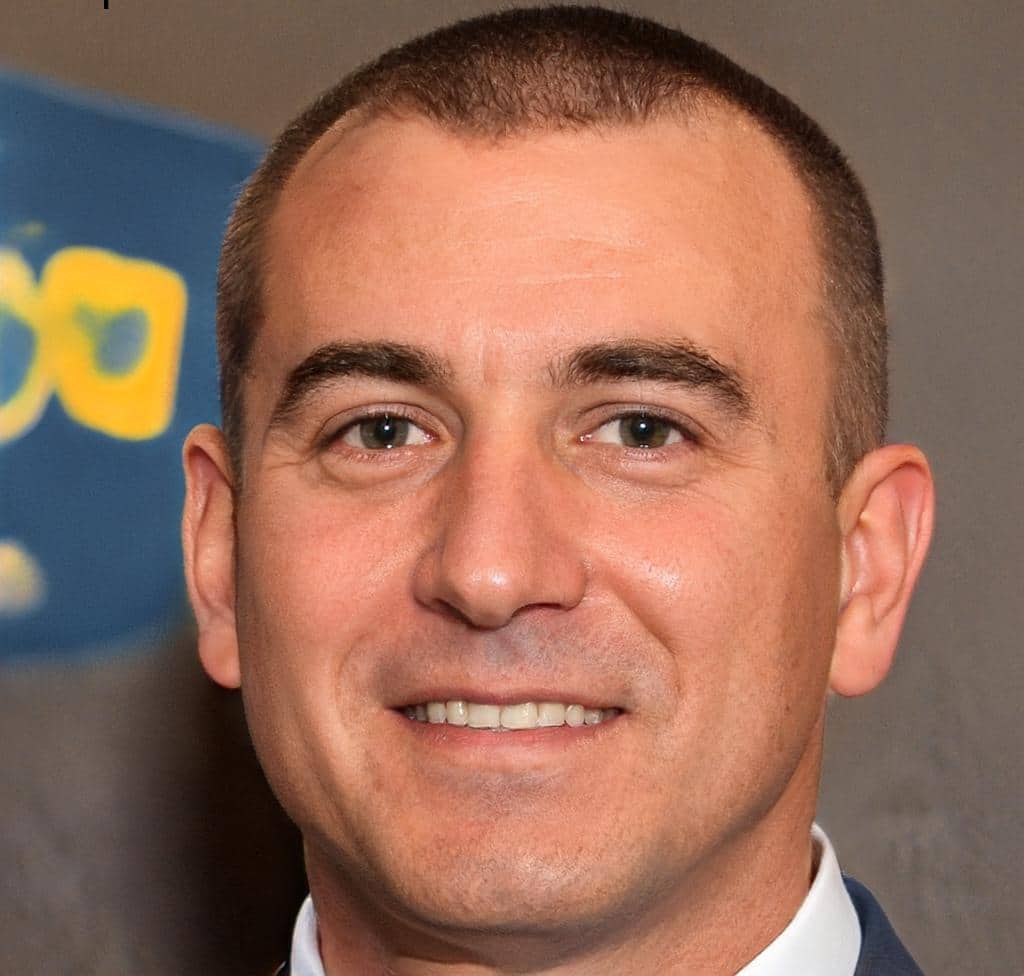
Venetian Agrees to $7.2M Fine Over AML Failures Linked to Illegal Bookmaker Mathew Bowyer

The Venetian Resort Las Vegas has agreed to a $7.2 million fine after Nevada gaming regulators determined the casino failed to perform adequate anti-money laundering due diligence on illegal bookmaker Mathew Bowyer, who deposited $22.3 million across at least 30 visits between 2019 and 2021. Apollo Global Management, which acquired the property from Las Vegas Sands Corp in 2021, will absorb the penalty, making this one of the most significant AML enforcement actions against a single Las Vegas property in recent years.
Nevada Regulators Fine The Venetian $7.2 Million for Anti-Money Laundering Failures
The Core Violation: A Casino Host Who Knew Too Much
The Nevada Gaming Control Board (NGCB) and the Nevada Gaming Commission reached a settlement with The Venetian Resort Las Vegas requiring the property to pay $7.2 million for systemic failures in its anti-money laundering compliance program. At the center of the case is a Venetian casino host who investigators allege became aware of Mathew Bowyer’s illegal bookmaking activities as early as 2019, yet the casino failed to escalate the concern, file appropriate Suspicious Activity Reports, or terminate the relationship with Bowyer. [1]
Under the Bank Secrecy Act (BSA), U.S. casinos are classified as financial institutions and must maintain robust AML programs. These programs require casinos to file Currency Transaction Reports (CTRs) for cash transactions exceeding $10,000 and Suspicious Activity Reports (SARs) when they detect or have reason to suspect that funds derive from illegal activity. The Venetian’s failure was not a paperwork technicality; investigators allege the casino had direct human intelligence about Bowyer’s criminal enterprise and still did not act.
Between 2019 and 2021, Bowyer made at least 30 documented visits to The Venetian, depositing a total of $22.3 million and ultimately losing $3.6 million of that sum to the house. The scale of those transactions, combined with the alleged prior knowledge of a casino host, forms the factual backbone of the NGCB’s case against the property. [1]
Apollo Global Management Inherits Las Vegas Sands Corp’s Liability
The timing of the fine creates a notable corporate wrinkle. The violations occurred between 2019 and 2021, a period when The Venetian was still owned and operated by Las Vegas Sands Corp, the casino giant founded by the late Sheldon Adelson. Apollo Global Management completed its $2.25 billion acquisition of The Venetian Resort Las Vegas in November 2021, taking on the property’s operational liabilities in the process.
Apollo Global Management has not publicly disputed the settlement, and the $7.2 million fine will be paid by the current ownership entity. For a private equity firm managing hundreds of billions in assets, the dollar amount is manageable. The reputational and regulatory signal, however, carries more weight: Nevada regulators demonstrated they will pursue AML enforcement actions even when the responsible management team has changed hands. This sets a clear precedent that acquiring a Nevada gaming license means acquiring all prior compliance obligations.
Las Vegas Sands Corp, which retains its other global casino operations including properties in Macau and Singapore, has not been separately named in the Nevada enforcement action related to this specific fine. The liability transferred with the asset sale.
Who Is Mathew Bowyer and Why Does His Case Matter?
An Illegal Bookmaker at the Center of Multiple Investigations
Mathew Bowyer operated an illegal sports betting and bookmaking business based in California. His operation attracted federal scrutiny that extended well beyond Nevada gaming regulators. Bowyer became publicly known in connection with a broader investigation that touched Major League Baseball, after it emerged that Ippei Mizuhara, the former interpreter for Los Angeles Dodgers star Shohei Ohtani, had accumulated approximately $17 million in gambling debts with Bowyer’s illegal operation. Mizuhara pleaded guilty to federal charges in 2024 related to bank fraud and filing a false tax return.
Bowyer himself pleaded guilty in 2024 to federal charges of illegal bookmaking and money laundering conspiracy. His sentencing drew national attention because of the Ohtani connection, but the Nevada regulatory case against The Venetian focuses specifically on the casino’s own compliance failures rather than Bowyer’s criminal conduct. Regulators are not punishing The Venetian for Bowyer’s crimes; they are punishing the casino for failing to identify and report suspicious activity that its own staff allegedly recognized.
The distinction matters legally and practically. Nevada gaming law places an affirmative duty on casino operators to know their customers, monitor transactions, and report suspicions to the Financial Crimes Enforcement Network (FinCEN). A casino host who allegedly knew Bowyer ran an illegal book and continued to service his account represents exactly the kind of internal control failure that AML regulations are designed to prevent. [1]
The $22.3 Million Paper Trail
Bowyer’s $22.3 million in deposits at The Venetian over roughly two years averages out to more than $740,000 per visit across 30 documented trips. Transactions at that volume, from a single patron, would ordinarily trigger enhanced due diligence reviews under any standard casino AML program. The fact that Bowyer ultimately lost $3.6 million to the property means The Venetian generated direct revenue from a patron its own staff allegedly suspected of criminal activity.
That revenue-versus-compliance tension is precisely what regulators target in AML enforcement. Casinos face a structural incentive to retain high-value players, and AML programs exist to ensure that financial incentive does not override legal obligations. The Venetian case is a textbook example of what regulators describe as a culture of non-compliance at the account management level.
Nevada AML Enforcement: How the $7.2M Fine Compares to Recent Casino Penalties
The Venetian fine does not exist in isolation. Nevada gaming regulators and federal authorities have pursued a series of significant AML enforcement actions against major Las Vegas properties over the past decade. The following table places the Venetian penalty in context alongside other notable cases.
| Casino / Property | Fine Amount | Year | Primary Violation |
|---|---|---|---|
| The Venetian Resort Las Vegas | $7.2 million | 2026 | AML failures, illegal bookmaker Mathew Bowyer |
| Wynn Las Vegas | $130 million (FinCEN) | 2023 | BSA / AML program failures, high-risk foreign patrons |
| Las Vegas Sands Corp | $47 million (FinCEN/DOJ) | 2013 | Failure to file SARs, suspicious cash transactions |
| Crown Resorts (Australia) | AUD 450 million | 2022 | AML failures, organized crime patron access |
The Wynn Las Vegas settlement with the Financial Crimes Enforcement Network (FinCEN) in 2023 remains the largest single AML penalty against a U.S. casino, at $130 million. That case involved systemic failures across multiple years and thousands of transactions linked to high-risk foreign nationals. The Venetian’s $7.2 million fine is smaller in absolute terms but significant given that it stems from a single identified patron and a specific allegation of staff-level knowledge. [1]
Nevada’s regulatory framework gives the Nevada Gaming Control Board investigative authority and the Nevada Gaming Commission final approval power over fines and license conditions. Together, the two bodies form one of the most active casino regulatory systems in the world. The NGCB employs dedicated AML compliance examiners who conduct periodic audits of casino transaction records, patron due diligence files, and SAR filing histories.
Federal oversight adds another layer. FinCEN, a bureau of the U.S. Department of the Treasury, has authority to impose civil money penalties on casinos that violate the Bank Secrecy Act independently of any state-level action. The Venetian settlement appears to be a state-level Nevada Gaming Commission action; any separate federal FinCEN review has not been publicly confirmed as of the time of writing.
[PLACEHOLDER: IMAGE_2]
What This Means for Privacy-Focused Gamblers and the No-KYC Casino Debate
The Venetian case is a sharp reminder of why the tension between casino surveillance and player privacy is not abstract. Traditional land-based casinos in Nevada operate under some of the most intensive financial monitoring requirements in the world. Every high-value patron generates a paper trail: currency transaction reports, patron due diligence files, win/loss records, and potentially suspicious activity reports filed directly with federal authorities. Mathew Bowyer’s 30 visits and $22.3 million in deposits existed inside that system, and the system still failed to flag them in time.
For players who prioritize financial privacy, the Venetian enforcement action illustrates the structural reality of regulated land-based gambling: your transactions are not private, and the casino has a legal obligation to report them. This is precisely the context that drives interest in no-KYC online casinos, where players can participate without submitting identity documents or generating the kind of financial records that feed into AML reporting systems. The regulatory pressure on land-based casinos to surveil their patrons more aggressively is only increasing, not decreasing, in the wake of cases like this one.
It is also worth understanding what AML enforcement means for ordinary players who have no connection to illegal activity. When casinos face multimillion-dollar fines for compliance failures, they respond by tightening due diligence across the board. That means more identity verification requests, more source-of-funds questions, and longer delays for high-value withdrawals, even for entirely legitimate players. The compliance cost of cases like the Venetian fine ultimately flows downstream to every patron. For those following betting industry news, this enforcement trend is one of the most consequential regulatory developments shaping how casinos interact with their customers in 2026.
Key Takeaways
- The Venetian Resort Las Vegas agreed to pay a $7.2 million fine to Nevada gaming regulators for AML compliance failures tied to illegal bookmaker Mathew Bowyer. [1]
- Mathew Bowyer made at least 30 visits to The Venetian between 2019 and 2021, depositing $22.3 million and losing $3.6 million to the casino.
- A Venetian casino host allegedly knew of Bowyer’s illegal bookmaking activities as early as 2019, yet the casino failed to file required Suspicious Activity Reports or terminate the relationship.
- Apollo Global Management, which acquired The Venetian from Las Vegas Sands Corp for $2.25 billion in November 2021, will pay the fine as the current license holder.
- Mathew Bowyer pleaded guilty in 2024 to federal charges of illegal bookmaking and money laundering conspiracy, with his case also linked to the Shohei Ohtani interpreter scandal.
- The Nevada Gaming Control Board and Nevada Gaming Commission jointly oversee AML compliance for Nevada casinos; federal oversight from FinCEN under the Bank Secrecy Act runs in parallel.
- The Wynn Las Vegas paid a $130 million FinCEN penalty in 2023, the largest U.S. casino AML fine on record, placing the Venetian’s $7.2 million settlement in broader industry context.
Frequently Asked Questions
What did The Venetian do wrong in the Mathew Bowyer case?
Nevada gaming regulators allege that a Venetian casino host knew Mathew Bowyer operated an illegal bookmaking business as early as 2019 but the casino failed to conduct sufficient due diligence, file Suspicious Activity Reports, or end the patron relationship. Bowyer deposited $22.3 million across at least 30 visits between 2019 and 2021, generating direct revenue for the property while the alleged compliance failures continued. [1]
Who is paying the $7.2 million Venetian fine?
Apollo Global Management, the current owner of The Venetian Resort Las Vegas, will pay the $7.2 million fine. Apollo acquired the property from Las Vegas Sands Corp in November 2021 for approximately $2.25 billion, inheriting the casino’s outstanding regulatory liabilities in the process. Las Vegas Sands Corp has not been separately named in this specific enforcement action.
How does the Venetian fine compare to other Nevada casino AML penalties?
The $7.2 million Venetian fine is significant but not the largest in Nevada or U.S. casino history. Wynn Las Vegas paid a $130 million penalty to FinCEN in 2023 for systemic AML failures involving high-risk foreign patrons. Las Vegas Sands Corp paid $47 million in a combined FinCEN and Department of Justice settlement in 2013 for failure to file Suspicious Activity Reports.
What is Mathew Bowyer’s legal status?
Mathew Bowyer pleaded guilty in 2024 to federal charges of illegal bookmaking and money laundering conspiracy. His case gained national attention through its connection to Ippei Mizuhara, the former interpreter for Shohei Ohtani of the Los Angeles Dodgers, who pleaded guilty to bank fraud after accumulating approximately $17 million in debts with Bowyer’s illegal operation.
What AML obligations do Nevada casinos have under U.S. law?
Under the Bank Secrecy Act, U.S. casinos are classified as financial institutions and must maintain written AML compliance programs. These programs require filing Currency Transaction Reports for cash transactions above $10,000, filing Suspicious Activity Reports when criminal activity is suspected, and conducting enhanced due diligence on high-risk patrons. The Financial Crimes Enforcement Network (FinCEN), a bureau of the U.S. Treasury, enforces these requirements at the federal level alongside state regulators like the Nevada Gaming Control Board.
The Bottom Line
The $7.2 million fine against The Venetian Resort Las Vegas is more than a financial penalty. It is a documented case study in how AML compliance breaks down at the human level: a casino host with direct knowledge of a patron’s criminal enterprise, a compliance program that failed to catch or act on that knowledge, and $22.3 million flowing through the property over two years as a result. Nevada regulators made clear that the change in ownership from Las Vegas Sands Corp to Apollo Global Management does not erase the liability created under the previous regime.
For the broader casino industry, the Venetian enforcement action reinforces a regulatory direction that has been building for years. The Nevada Gaming Control Board, FinCEN, and the Department of Justice have all signaled that AML enforcement in the gaming sector will intensify, not relax. Casinos that rely on high-volume VIP play face the sharpest scrutiny, because the financial incentive to retain those players is exactly where compliance programs are most likely to bend. The Mathew Bowyer case, with its connections to federal bookmaking charges and the Shohei Ohtani interpreter scandal, gave regulators a high-profile vehicle to make that point at scale.
The lesson for every stakeholder in the gambling industry is straightforward: compliance programs are only as strong as the people running them, and a single casino host’s decision to look the other way can cost the property $7.2 million and years of reputational damage. In an era of tightening AML enforcement, the cost of non-compliance has never been higher.
Looking for Casinos That Respect Your Privacy?
18+ | Play Responsibly | T&Cs Apply
Sources
- GamblingNews.com – Venetian Resort Las Vegas fined $7.2 million by Nevada gaming regulators over AML failures linked to illegal bookmaker Mathew Bowyer, including details on deposit amounts, visit frequency, and casino host allegations.